
A Guide to One of Today’s Most Advanced Facelift Techniques
As facelift techniques continue to evolve, one procedure that has become increasingly popular is the deep plane facelift. Known for its natural-looking and long-lasting results, this technique is often recommended for people who want a more youthful, lifted appearance, especially in the cheeks, jawline, and neck.
So, what makes the deep plane facelift different? And how do you know if it’s right for you? Here’s everything you need to know.
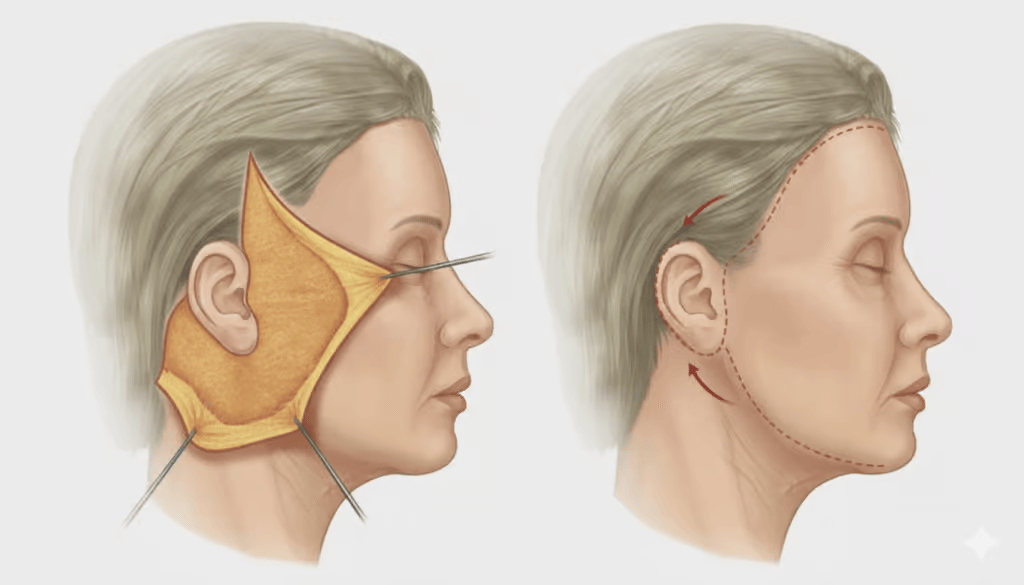
A deep plane facelift is an advanced surgical technique that lifts and tightens the deeper layers of the face, not just the skin. The “deep plane” refers to the area beneath the skin and SMAS (superficial musculoaponeurotic system), where the muscles, ligaments, and fat pads that shape the face are located.
Unlike a traditional facelift, which mainly pulls the skin tighter, a deep plane facelift releases and repositions the deeper facial structures.
A deep plane facelift:
- Creates a more natural, refreshed look
- Avoids the “pulled” or overly tight appearance
- Offers longer-lasting results, typically 10-15 years
- Provides more comprehensive lifting through the midface, jawline, and neck
Because it addresses the root cause of sagging, rather than the surface layer, it’s particularly effective for people with moderate to severe signs of ageing.
Who Is a Good Candidate for a Deep Plane Facelift?
Age alone doesn’t determine whether you’re suitable for this procedure. Instead, surgeons look at your degree of facial ageing, skin condition, and overall health. You may be a good candidate if you have:
- Sagging cheeks or midface
- Deep nasolabial folds
- Jowls or a softened jawline
- Neck laxity
- Good skin elasticity
The procedure is commonly performed on patients in their 40s-60s, but suitability depends more on facial anatomy than age.

How Is a Deep Plane Facelift Performed?
A deep plane facelift is carried out under general anaesthetic and typically takes 4-6 hours, depending on complexity and whether additional procedures, like eyelid surgery or fat grafting, are done at the same time.
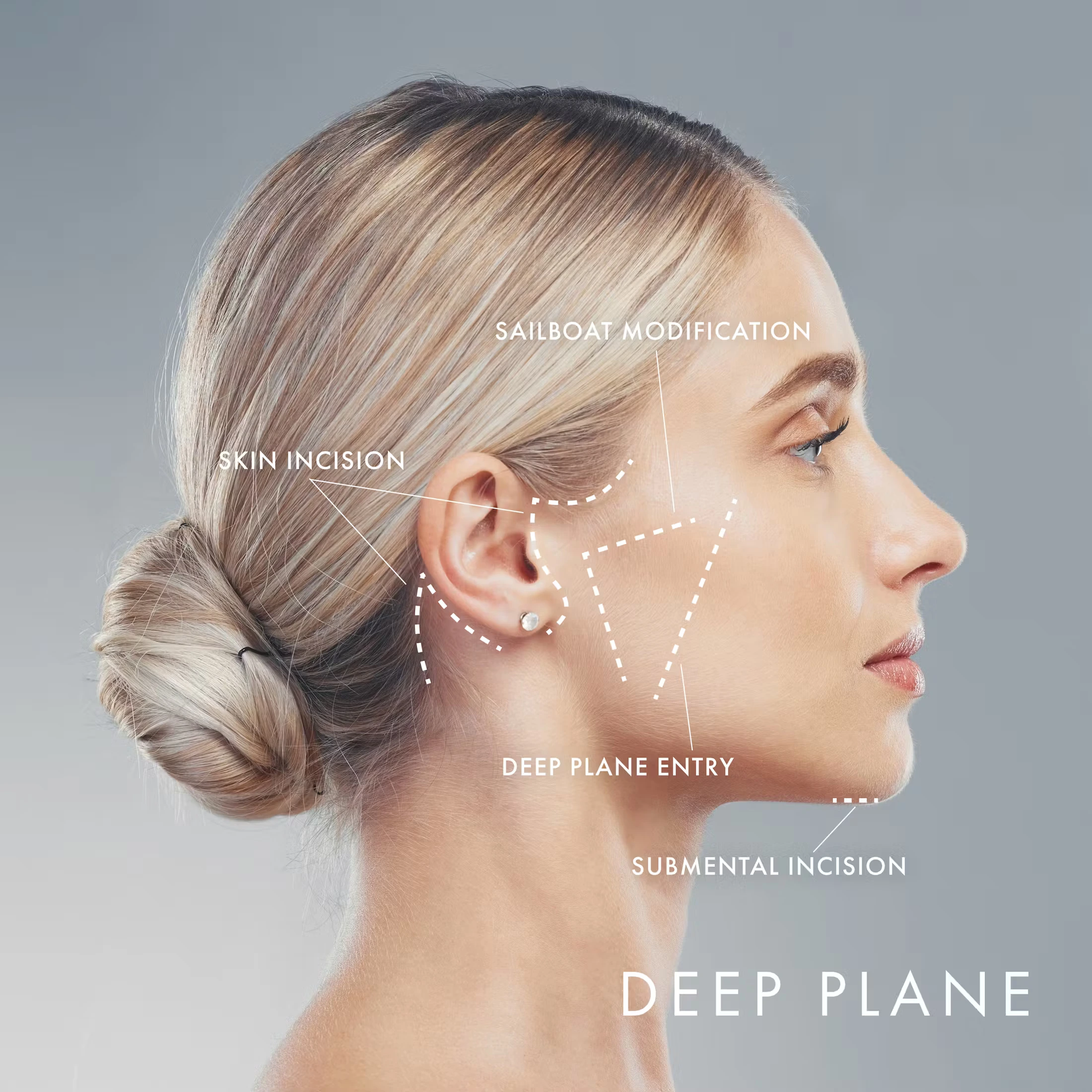
The steps usually include:
1. Carefully placed incisions
Incisions are made along the hairline near the temples, around the ear, and into the lower scalp. These are designed to be as discreet as possible once healed.
2. Lifting the skin and releasing deeper tissues
The surgeon gently lifts the skin before releasing and repositioning the deeper layers, including fat pads and muscle. This creates a smooth, youthful contour without putting tension on the skin.
3. Repositioning for natural results
The cheeks, jawline, and neck are lifted as a unified layer, which is why deep plane facelifts achieve such natural and long-lasting outcomes.
Recovery After a Deep Plane Facelift
Recovery varies between patients, but you can generally expect:
- Swelling and bruising for the first 1-2 weeks
- Discomfort that can be managed with prescribed pain relief
- A return to normal daily activities within 2-4 weeks
- Final results in 3-6 months
Keeping your head elevated, even while sleeping, helps reduce swelling, and your surgical team will provide personalised aftercare instructions to support smooth healing.
Are There Risks?
As with any surgical procedure, a deep plane facelift carries potential risks, including:
- Infection
- Haematoma
- Scarring
- Nerve injury
However, when performed by a highly experienced and qualified plastic surgeon, complications are uncommon, and outcomes are generally excellent.
Is a Deep Plane Facelift Right For You?
If you’re looking for a facelift that delivers natural, youthful, and long-lasting results, the deep plane facelift may be the ideal option. It offers a more holistic lift than traditional facelifts and is especially effective for patients with moderate to more advanced signs of ageing.
Ready to Find Out More?
If you’re considering facelift surgery and want results that look refreshed, not overdone, get in touch to arrange an initial consultation. We’ll assess your facial anatomy, discuss your goals, and help you decide whether a deep plane facelift is the right approach for you.